Yes absolutely. The full policy proposal is available to read here.
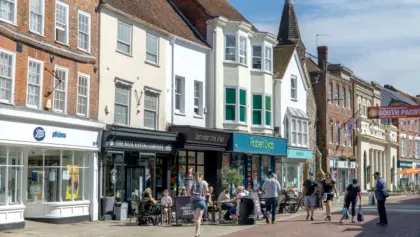
Cut business rates. Broaden the tax base. Back Britain’s high streets.
The Real Rates Reform Alliance is campaigning for a Hybrid Business Rate solution to be implemented across the UK: substantially lower property-based business rates, balanced by a modest levy on eligible online sales.
Supported by UKHospitality, The Institute of Directors, Music Venue Trust, Association of Town and City Management and organisations across the country.
Support Us
Support advocacy and campaign activity to secure a government feasibility study of the Hybrid Business Rate proposal.
Updates
Receive the latest news, campaign updates and opportunities to support change.
Our Alliance Members





















Why Reform Rates Now?
Reduce The Burden
An outdated business rates system continues to unfairly penalise bricks and mortar properties in high streets, towns and city centres across the UK.
Create A Fairer Tax Base
The rates system is out of balance. It is estimated that retail and hospitality pay 34% of business rates while contributing 9% to the UK economy. By comparison, the digital economy contributes an estimated 20% in GVA but pays around 7-9% in business rates.
Strengthen The High Street
Without structural business rates reform, the future of our high streets, local employment and the UK's growth ambitions remain at risk.

£0
GVA (estimated) generated by businesses on Britain's high streets
0
jobs (estimated) are supported by Britain's high streets
0
commercial properties (estimated) across the UK provide premises from which businesses trade, employ people and serve their communities.
What is the Hybrid Business Rate Solution?
Lower business rates
We want to see business rates cut so the business-rate multiplier is restored to its 1990 level (34.8p) easing costs for bricks-and-mortar businesses and high streets.
A Broader Tax Base
We want to see a small levy placed on all online sales (administered via the VAT system). This would ensure digital operators contribute fairly, with exemptions for products and services that drive consumers to the high street.
Sustainable Revenue
A Hybrid Business Rate could generate similar revenues for government while reducing reliance on property taxes, broadening the tax base and lowering the cost of reliefs.
Business rates are one of the most frustrating taxes facing UK firms. They penalise investment in property improvements and expansion, hitting businesses regardless of their profitability, and are shaped around an economy from a different era.
Institute of Directors
Real world impact of rate increases
A Hotel Chain Forced to Review Staffing
A British hotel chain which offers rooms at an accessible price point to customers has seen its rates bill rise by over 100% since April 2026 across its 12 London hotels — a £4 million increase spread over four years. This means almost 10% of all revenues will go directly to business rates. To cope, the chain is reviewing staffing levels across its hotels and leaving vacancies unfilled.

Holding Back Investment
This world-class attraction in a UK city centre delivers unforgettable experiences for families and corporate groups alike, however under the Government’s latest rules on business rates, the business has seen its annual rates bill increase by over a third, pushing its total tax burden past £2 million.
As a result, the business has already began to review further UK investment in the short term and focus on international markets for growth and expansion. For the wider economy, that means fewer jobs and a weaker experience economy.

An 800% Business Rates Shock
A hospitality and live music venue saw its rateable value increase from £92,500 to £320,000 less than a year after taking on a lease, with the change backdated to the start of trading and issued without warning. Combined with the reduction in retail and hospitality relief, this resulted in an effective business rates increase of almost 800%.
After challenging significant errors in the valuation, the business was able to reduce the assessment but the process has been lengthy and costly. The venue says the system is not only unfair to bricks-and-mortar businesses that drive footfall and nightlife, but also undermined by inconsistent and error-prone valuations that can drain cashflow and force firms to spend thousands correcting mistakes.

What would the Hybrid Business Rate solution save you?
Your estimated annual saving
0Our Alliance Steering Group
Our Steering Group sets the direction of the campaign, commissions new research and engages with Government at all levels.
FAQS
Is there any research to support the Hybrid Business Rate solution?
Aren't you proposing another tax that consumers will end up paying?
The Hybrid Business Rate (HBR) would fundamentally rebalance the business rates system by significantly reducing the rates paid by bricks and mortar businesses, funded through a new modest levy on eligible online transactions. Illustrative modelling demonstrates that this approach is likely to be revenue neutral or could even generate more revenue for the Government than the current system lowering one of the largest fixed costs facing businesses, improving cashflow and enabling greater investment in people, places and growth. While we believe businesses should absorb the cost of the digital levy rather than passing it on to consumers, that decision would ultimately rest with individual firms. The wider benefits would extend beyond business, helping to revitalise high streets, support job creation and strengthen local economies across the UK.
Doesn't your proposal penalise businesses that trade both online and from physical premises?
No. The Hybrid Business Rate has been designed to support businesses that invest in physical premises, regardless of whether they also trade online. Most successful businesses now operate across multiple channels, and any business with a physical property would benefit from lower business rates under the proposal. To encourage continued investment in town and city centres, the model also recommends exemptions for online transactions that drive footfall to physical locations, such as click and collect orders and cinema or theatre ticket sales. By reducing the cost of occupying bricks and mortar premises, the Hybrid Business Rate rewards investment that supports jobs, strengthens local communities and helps create vibrant high streets.
Why hasn't Government already done this, and what does the Treasury think?
Business rates reform has been promised for many years, but successive governments have made only incremental changes rather than delivering the fundamental reform that businesses need. The Hybrid Business Rate offers a practical solution that would provide meaningful relief for hundreds of thousands of businesses across the UK. We have engaged constructively with Treasury officials throughout the development of the proposal and continue to contribute to the policy debate to help secure a fairer, more sustainable business rates system.
Does taxing the online giants risk provoking retaliatory tariffs from President Trump?
The Hybrid Business Rate is fundamentally different from the digital services taxes introduced in some European countries that have attracted US tariffs. It is not designed to target specific companies or sectors. Instead, it modernises and rebalances the UK's property based business rates system to better reflect how businesses operate in today's economy. Under the proposal, businesses would apply a modest levy to eligible online sales, while benefiting from a significant reduction in the business rates they pay on their physical premises. This creates a fairer balance between digital and physical commerce while supporting continued investment in bricks and mortar businesses.
What about small businesses, start-ups and entrepreneurs?
The Hybrid Business Rates proposal is designed to protect smaller businesses by using the existing VAT framework, including an appropriate turnover threshold, ensuring that the smallest firms are not brought into the system unnecessarily. Its objective is to support economic growth while creating a fairer, more sustainable business tax system. Although the levy would be collected by businesses, they would have the flexibility to absorb the cost or pass it on to consumers, depending on their commercial circumstances and operating margins.